
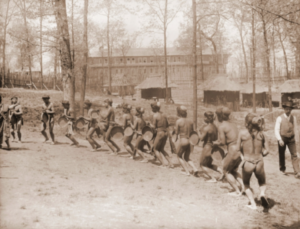
World Fairs across the globe featured technological advancements, grand architecture, and entertainment for millions to see. On the surface level, these exhibitions appear as a space to highlight a country’s achievements, but taking a closer look, there is a dark side to it that advanced racist ideologies and harmed indigenous peoples. Most notably, the 1904 World Fair in St. Louis, also known as the Louisiana Purchase Exposition, transformed human life into anthropological art, turned representation into a systemic crime.
At St. Louis, a thousand Filipinos were forcibly taken from their homeland and put in a village-like display to showcase their “primitive” lifestyle. This was not a cultural demonstration aimed to educate Americans about other cultures but a curated performance designed by white organizers to portray them as uncivilized and inferior. For example, the Igorot people of the Philippines would eat dog during a celebration, but at the World Fair, they had them eat dog daily. Displacing thousands of foreign individuals and placing them in exhibits that portray them as the “other” made them a centerpiece for attention and entertainment.
The abuse extended beyond Filipinos to indigenous groups from other parts of the world as well. Ota Benga, a young teenager from what is now known as the Democratic Republic of Congo, was captured and transported to the World Fair, where he had to withstand cold winter days without sufficient shelter and clothes. Not only was he kidnapped, but he was also exploited and dehumanized. The World Fair, which had a multi-million dollar budget, treated thousands of individuals, including a child, as living artifacts used to promote imperial narratives.
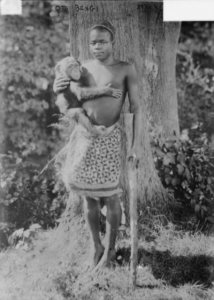
Unfortunately, Benga’s time did not end after the World Fair closed. He was then transferred to the Bronx Zoo, where he was put on exhibition in the Monkey House. Visitors to the zoo could see Benga in a cage amongst primates. It is clear that this placement was aimed to suggest that Africans are closer to animals than humans. The staging of Benga was deliberate, where the zoo director even scattered bones to make viewers believe that he was a cannibal.
After the exhibit ended due to public outcry, Benga was left without a home. He was placed in an orphanage, which marked the 3rd time that he was relocated against his will. Tragically, Ota Benga developed depression and took his own life. His suicide reveals the emotional and physical stress that America inflicted on him. Being just a young child, he was exploited for entertainment, placed in rough living conditions, and intentionally portrayed in a savage manner, strengthening the idea of racial hierarchies and reinforcing imperial power dynamics.
The World Fair and Bronx Zoo committed a crime against humanity by inhumanely displaying, wrongly representing, and ultimately endangering foreign indigenous communities and even children for the sake of a spectacle. They turned human life into an exhibit to be viewed like art at a museum. This was a crime committed through the staging and curating of a narrative. When cultural institutions are left unchecked, they are at risk of abusing power and harming people.
Related posts:
 The Art of Captivity
 Lost Souls on Display
 Met Gala faces backlash on theme of controversial designer
 Fossilizing Crime
 The British Museum and Cultural Ownership: A Controversial Legacy of Acquisitions
 Art, Crime, and International Law
 The Need for Autonomy in Indigenous Media Representation
Powered by YARPP.