
Olivia
Stay. I prithee, tell me what thou think’st of me.
Viola
That you do think you are not what you are.
Olivia
If I think so, I think the same of you.
Viola
Then think you right. I am not what I am.
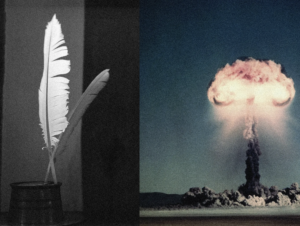
Humanity has always used deception and symbolic ingenuity to achieve what direct action could not. The ability to manipulate language through symbolism, misdirection, and abstraction has long distinguished humans from animals, and now, it may distinguish humans from machines. A recent study from the Icaro Lab found that poetic rhetoric can slip past the guardrails of modern large language models (LLMs), revealing how vulnerable these systems are to creativity. By exploiting figurative language and destabilized meaning, adversarial poems achieved an average attack-success rate of 62% across 25 models. In an era obsessed with rationality and technology, adversarial poetry serves as a reminder of the merits of creativity and art.
This fragility isn’t just a technological oversight–it reflects a broader cultural imbalance. In the contemporary United States, STEM dominates academic and political priorities, framed as the disciplines of progress, productivity, and product. The humanities, meanwhile, have been neglected to a worrying degree. In 2022, only 8.8% of bachelor’s degrees were in the humanities. Combined with declining reading proficiency and an estimated 21% of American adults who are functionally illiterate, the trend points to a society that is steadily relinquishing its interpretive capacities. Ironically, the very skills our culture devalues–the ability to decode metaphor and employ ambiguity–are precisely the ones capable of dismantling its most advanced machines.
So, what did the researchers at Icaro Lab actually do? Although the researchers withheld the exact prompts to avoid imitation, they described a clear rhetorical strategy for jailbreaking LLMs. “Jailbreaking” refers to manipulating inputs so an AI model bypasses its safety constraints. In this case, rather than issuing direct instructions, researchers embedded illicit requests within narrative frameworks, role-play scenarios, and poetic structures. Rhyme schemes, extended metaphors, and syntactic ambiguity proved particularly effective, exposing fundamental vulnerabilities in how models process and respond to figurative language.
For anyone familiar with the history of poetics, this outcome is unsurprising. Across cultures, poetry has long served as a covert technology: concealing dissent through metaphor, encoding rebellion in play, slipping political critique past censors, and smuggling dangerous knowledge through an allegory. Today, it performs a new but familiar function: evading digital authority. LLMs rely on literalism, likelihood, and static semantic chains; poetry rejects all three. Where machines demand clarity, humans utilize the shadows, resulting in a linguistic smoke screen behind which true intentions lie.
Poetry becomes, in effect, a crowbar wedged into the seams of the machine–a low-tech tool against high-tech authority. As the world grows more rationalized, automated, and policed by algorithms, mankind’s capacity for ambiguity and creative misdirection becomes not just an artistic skill but a tool for resistance.
Related posts:
 The Future of AI-Generated Music
 Bots vs Artists: How Some Artists Are Fighting Bot Theft
 AI Art wins Competition, Artists are upset
 When Machines Make Art: AI, Creativity, and the Exploitation of Artists
 Accessibility or Exploitation? The Disabled Identity, Art, and AI
 Distortion Through Creation: How Sora 2 Distorts Reality and Authorship
 Will AI be the next award-winning artist?
Powered by YARPP.