
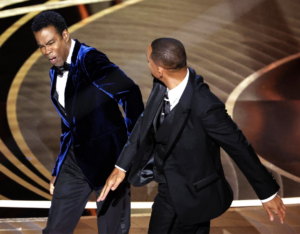
Though many awards were received during the 2022 Oscars, they were all completely overshadowed when Will Smith stormed the stage and slapped Chris Rock straight across the face. With a massive TV audience watching in stunned silence, most people believed it was staged. Smith subsequently accepted an award and gave a heart-felt speech on that same night. The media was flooded with opinions of the event for the following days, but just as quickly as the events appeared, the outrage vanished. He eventually came forward to apologize, but then kept a low profile afterwards. Within a few months, he resumed promoting new films and started to regain the public’s affection. An act of public violence on one of the biggest annual awards ceremonies was brushed aside and forgotten in such a short amount of time. This incident did not change Will Smith’s legacy. Instead, it got swept under the rug due to the innate tendency to protect the celebrities that the audience admires.
Being a celebrity serves a type of a cultural shield. In a way, being famous and admired gives a type of symbolic protection that ordinary people do not have. The shield of symbols creates a bank of good will that can shape overall viewpoints. When a celebrity commits a crime, their symbolic shield acts as a type of cloak to hide the truth through a charismatic performance. Previous performances and songs become a type of distraction that makes wrongdoing a temporary interruption rather than part of the celebrity’s personality. Celebrities have the ability to rewrite their overall story through their reach to the public. Interviews, social media posts, and planned silences can be used to edit a crime into a simple mistake that makes it more socially acceptable. The status of being a celebrity serves as a shield and privilege that can rewrite reality.
Due to this cultural protection, it is clear that power rather than morality determines who is held accountable. Cancel culture is presented in a way that has the ability to end someone’s career, but it isn’t as simple as it may seem. Cancel culture presents inconsistent realities. A particular celebrity with a lot of cultural capital may be less affected by canceled culture than another celebrity with less. For example, if a celebrity has partnerships with successful brands or loyal fans, their crimes may be reframed as a learning experience. Those who have less cultural power may be criticized under tougher lenses. Despite the belief that cancel culture is a form of democratic accountability, it ends up causing greater social inequity.
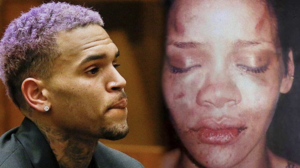
An extreme case of celebrity cultural protection would have to be the wrongdoings of Chris Brown. In 2009, the domestic violence incident between Chris Brown and Rihanna made headline news around the world after the graphic photos of the severity of the crime became public. This type of crime would have ended the careers of a majority of celebrities, but Brown was dominating the radio and clubs with his ubiquitous presence during the 2000s. He was at the top of musical charts and international tours. Brown’s fan base remained loyal and even defended his behavior, blaming it on his youth, stress, and struggle. Brown was found guilty of felony assault, but served no jail time. He continued to perform and partner with other music artists despite getting additional accusations.
The idea of celebrity preservation and protection is an example of the intersection between art and crime in the way that legacies can easily be rewritten. A cultural forgery is crafted through reconstruction of images through public relation strategies. Through “heart-felt” apologies, confessions during interviews, and giving back to the community, a celebrity’s immorality can be simply concealed. Devoted fans and audiences also play an important role when they begin to defend the celebrity in question. Negative publicity is suppressed when the audiences choose to support a big name regardless of their actions.
When taking a closer look at the nature of “cancel culture”, it is important to understand that it is a facade. Cancel culture is rooted in warranting justice, but it is just a temporary performance of disapproval. The individuals who have a lot of cultural power understand that being cancelled is only a pause in action. It is common to use the backlash to rebrand and create a story of resilience and growth. The individuals who do not have a lot of cultural power will feel the effects of “cancel culture” in full. Cancel culture indirectly promotes a “might makes right” society.
Overall, the immunity given to celebrities has negative social consequences. When one’s fame grants the ability to override immorality to the public eye, history becomes skewed and biased. Reality is clouded with memorable moments and public relation stunts. These rewritten legacies remove celebrities’ abilities to take responsibility. This cultural protection removes accountability and promotes deception. When fame overpowers wrongdoing, the cultural record is fabricated and performed in crafted ways to make them seem like the truth.
Related posts:
 Who Cancelled My Favorite Celebrity?
 From Sex Scandals to Fame, Is It Worth It?
 The Psychology of Cancel Culture: Accountability or Mob Mentality
 Less Is More: Why Minimalism is for the Wealthy
 Sex, Drugs, and Rock & Roll… and Manslaughter
 Hooked on a Hook: The Soundtrack of Substance Use
 From Concern to Controversy: The Two Sides of the Ariana Grande “Wicked” Debate
Powered by YARPP.