
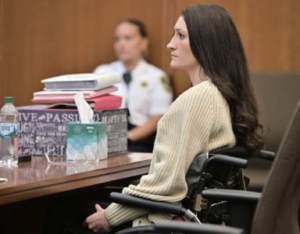
The advent of Tik Tok has led to various new developments spanning from whipped coffee to Tik Tok dances, and what now appears to be the latest, “Tik Tok witnesses.” The recent Massachusetts trial of Lindsey Clancy caught great social media attention as individuals took to Tik Tok for activism. The case, regarding the death of three children, dealt with questions of post-partum depression, psychosis, and overall women’s health. Additionally, apparent gaps in investigation and intriguing ties between various individuals raised various questions as to the validity of the investigation. This led many people to passionately believe that not only was Clancy suffering from post-partum psychosis, but rather that she was innocent in general.
As the case proceeded, so did the interest on social media. Interest in the case exploded as individuals began to speak out on Tik Tok. A particularly viral video included former Mclean Hospital worker, Emily Thorndike. During the trial, Thorndike had posted a Tik Tok video criticizing testimony and prosecutorial claims regarding patient care and staffing levels at the Mclean Hospital. This video caught attention as Clancy had spent five days in this hospital for inpatient psychiatric care shortly before the murder of her children. Thorndike’s video received considerable interest with over 600,000 likes and 6.2 million views. Following the attention received on the video, the defense decided to bring her in as a witness.
Initially, Thorndike was questioned voir dire, a legal process in which a judge or attorney questions prospective witnesses to check for bias, competence, or qualifications. Questioning voir dire is typically reserved for expert witnesses or used to determine the admissibility of specific evidence. In this case, following questioning, the jude ruled Thorndike competent but determined that her testimony was irrelevant since her employment at Mclean had ended prior to Clancy’s admission. As her employment had ended prior to Clancy’s stay, it was decided that the conditions of the hospital could have changed in that time and thus her statements held little relevance to the case.
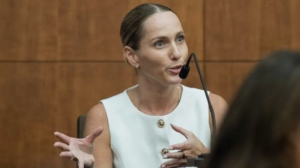
Despite this ruling, Thorndike’s testimony began to circulate on Tik Tok receiving great criticism and overall hate regarding the manner in which she spoke and answered the attorney’s questions. Many in the Tik Tok community blamed her for ruining the case, stating that she should have never been on the witness stand in the first place. The irony of the situation is that the viral hate videos on Tik Tok did not discuss the truth that her testimony would not be received by the jury. As it would not be received by the jury, her testimony would not be used as evidence and would hold no weight over the verdict. This lack of awareness and sporadic posting demonstrates how quickly false information spreads on social media and creates a mob mentality. It is interesting how simply individuals take information provided to them on social media without a fact check or an establishment of the creator’s credibility. The creation of “facts” from misunderstood realities poses a dangerous threat to the overall functioning of society. As Thorndike received considerable hate for affecting the case, yet the hate was unwarranted in that regard.
Though her testimony was never presented to the jury, her presence in the courtroom begs an important question: is it acceptable to conflate Tik Tok and the law? Thorndike’s presence in the courtroom was granted on the basis of content engagement. If her video had not received attention, she would have never taken the stand. Using Tik Tok to locate witnesses has the potential to both help and harm certain cases. For example, social media can now be used by attorneys to locate relevant witnesses who may provide further evidence and contextualization to a case. This aids the legal system and allows for justice to be served on a completely new level. Inversely, a case could be easily damaged through an ill-informed video or user support, as true crime junkies may involve themselves in cases under false pretenses in hopes of making it on the witness stand. With Thorndike, underlying intentions may have been present. Whether for fame, to grow the business she owns, or for justice, her intentions cannot be determined. False intentions serve to deeply harm court proceedings as they may undermine witness credibility or provide false testimony all together. All in all, this case certainly brings an interesting perspective to a conversation regarding the impact of social media as it has been seen to impact public opinion and social movements, but now has been transitioned into the realm of the law. The question as to social media’s ultimate impact on criminal proceedings is to be decided by time.
Related posts:
 Moderators Mental Health Negatively Impacted by their Job
 OnlyFans: The Access to Child Pornography
 Destroying Art in Protest: Is it Worth it?
 Behind the Black Square: The Quiet Sabotage of Viral Activism
 Is Election Season Brat?
 The Scam Behind the Scroll
 Chalk Lines and Controversy: Felix Morelo, TikTok, and the Debate Over Suicide Spots
Powered by YARPP.