
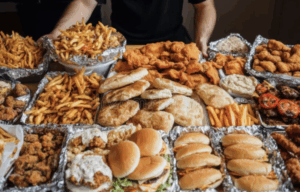
Culinary art has always been about more than taste, it’s a performance. The colors on a plate, the choreography of cooking, the way a dish is plated to be admired before it’s eaten, is all art. Food is one of the most accessible art forms, because it’s meant to be experienced with all the senses. But online, food has shifted from nourishment to spectacle. The camera eats first, and sometimes it’s the only one who does. What used to be a creative expression of culture and care has become something closer to content creation, where the goal isn’t to feed anyone, but to impress strangers through shock, scale, or novelty. In this version of culinary art, beauty comes from how well the video performs, rather than the flavor.
But the performance has a cost. When food becomes a prop, waste becomes part of the aesthetic. The crime isn’t illegal, but it’s hard to ignore; dishes created only to be dumped out, oversized meals prepared for views, and “challenges” designed around excess. What used to be a daily necessity now gets twisted into entertainment that relies on destruction. The more over-the-top the trend, the more food gets wasted. The art is the spectacle itself; the crime is how quickly the spectacle moves on, leaving perfectly edible food behind. Influencer culture takes something essential and turns it into disposable material, as if food has no meaning outside of the moment it appears on a screen.
Mukbang culture is one of the clearest examples. These videos started as a way for people to share meals with virtual audiences, but quickly morphed into extreme displays, like mountains of noodles, piles of fried chicken, tables covered in sauces and sides. Viewers aren’t watching for the flavors; they’re watching for the excess. Many creators don’t finish the food, or they eat in ways that require editing, cutting, or spitting out bites between takes. What looks like indulgence often ends with untouched piles swept into the trash. It’s a performance pretending to be consumption, turning the act of eating into entertainment and the leftovers into collateral damage.
The “cake or real?” trend takes it even further. Hyper-realistic cakes shaped like shoes, plants, and everyday objects went viral because they created a sense of surprise and disbelief. But behind the illusion was the reality that many of these huge, detailed, carefully constructed cakes weren’t eaten at all. They existed to be sliced once for the reveal and thrown out afterward. The trend blurred the line between culinary skill and waste, treating food like clay or paint rather than something meant to nourish. It turned a kitchen into a studio and a cake into a prop, revealing how easily the excitement of a trend can overshadow the function of the food itself.
The part that makes all of this feel heavier is the context we ignore. In the United States, up to 120 billion pounds of food is wasted each year, and meanwhile, 35 million Americans experience food insecurity, meaning they don’t have reliable access to enough food to live an active, healthy life. While influencers dump sauce over countertops or build giant bowls of cereal in their bathtubs for views, entire families go without meals. The contrast is unsettling. Food becomes entertainment for some and a scarcity for others.
When we look at these trends closely, they tell us more about the viewers than the creators. We reward the biggest waste, the wildest portions, the most shocking edits. We treat food as an aesthetic object rather than something that sustains life. In the context of the Art Crime Archive, these viral culinary trends become examples of how modern culture turns necessity into spectacle and spectacle into waste. The real crime isn’t in the kitchen, but in the way we scroll past these videos without thinking about what they represent. In a world where millions are hungry, we’ve built an entire genre of entertainment around throwing food away.
Related posts:
 Health-Food Marketing: Guilt-Free?
 The Art of Cooking Humans?
 The Dark Depths of Hollywood: P Diddy’s Sex Trafficking Ring
 Obession with Crime
 Roman Gladiators – A spectacle of the Past with Roots in the Present
 Jumping into Racism: The Artistic Origins of Jim Crow
 One Night, One Landfill
Powered by YARPP.