What are we supposed to think when protesters frame themselves in front of invaluable art pieces, capture the attention of those around them, and begin to “destroy” these pieces in the name of the environment? Art museums are meant to protect and preserve some of the most valuable pieces of human culture, which is exactly what makes them such powerful places for protest. In recent decades, activists have increasingly targeted famous works by throwing paint, soup, tomatoes, and other substances at them, attempting to draw attention to environmental issues. These acts may look destructive and unnecessary at first glance, but they are often planned performances designed and put on to provoke inner thought and outrage, as well as force conversation around different topics rather than the art piece.
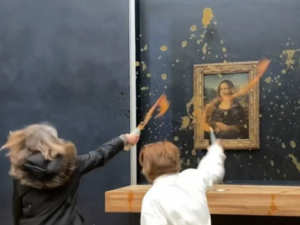
One of the most well known examples of this type of protest was in 2024 with Leonardo da Vinci’s Mona Lisa and Riposte Alimentaire protesters, who were attempting to garner attention about the unsafe and unhealthy conditions that farmers are forced to work in, as well as the lack of accessibility to proper food. Two protesters from the group began throwing soup at the painting, stunning viewers who likely traveled to the Louvre to see this specific painting. The two were taken into custody on suspicion of criminal damage and aggravated trespassing, though the two did not face any more serious consequences past this besides making a financial donation to the “victim,” or the museum, in other words.
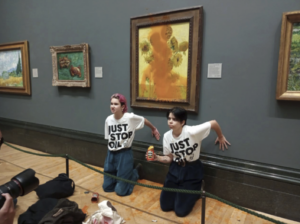
Another memorable example was in 2022 at Vincent Van Gogh’s Sunflowers painting when Just Stop Oil protesters performed a similar act and threw soup at this infamous painting. In addition to the soup throwing, the two protesters then glued themselves to the wall beneath and loudly questioned why or if people truly valued protecting these types of paintings more than the planet. Unlike the Mona Lisa protesters, the two associated with this specific protest were arrested, charged, and both sentenced to over a year in prison. They cited how they would accept the charges, but asked when oil companies would do the same for the harm they have incited on the environment.
This type of crime is spread across the globe with similar acts occurring in multiple continents with multiple types of art pieces. Most, if not all, of the artworks targeted in these protests are already protected by some sort of glass or cover to prevent any damages. However, the reasons for these acts and the discussions following are of the utmost importance to the performers, not whether or not they can actually damage or destroy art.
When considering all of these performances, it begs the question: why choose art as the target? One answer could be that there are high levels of emotion and culture tied to these works. If the same type of situation were to occur outside a government building or a company contributing to harming the planet, the sense of shock would not be as immediate as it is with historical paintings. They represent universal history, and if one is threatened with destruction, people take notice. That is what makes these works the perfect stage for protesters: attention is guaranteed.
These protests also blur the line between what counts as performance art and what counts as vandalism. Nothing about the acts are random, nor are they private. The location and artwork are deliberately chosen to really drive home the topic that is being protested. The goal is to spread the message, almost always through social media and videos and images being shared by those witnessing it first hand. In the end, though, destructive acts are being committed, and whether or not it is possible to press charges or force some sort of consequence on the protesters is something that varies act by act, performance by performance.
The viewpoint on these protests, their effectiveness, and the need for them is completely dependent on the individual viewer. What is clear is that the organizations behind them are fully aware of the power that famous pieces of art hold over the general, universal public. Placing demonstrations at these works is integral to getting their message out to the world and garner immediate attention. Whether the reaction is positive or negative, the organization will have succeeded in their mission. By choosing these objects that society deems priceless and irreplaceable, the protesters force the public to confront an uncomfortable, self-facing question: why does the possible destruction of a famous art piece create such a strong, emotional reaction while the destruction of the environment and our livelihoods feels distant and easy to ignore?