
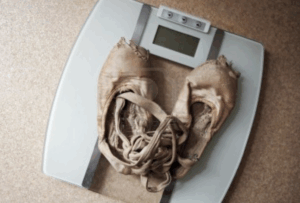
Elongated. Lithe. Slender. Toned. Lean. Petite. These are all words commonly used to describe the “ballerina body”. For centuries, female ballerinas have been scouted for a long neck, legs and arms; a short torso; and a slender, lean build. These “classic ideals” have long sparked conversations around the lack of diversity and pressure to maintain an appearance in the industry, but few know how deep the harmful toxicity goes. According to the Marquette University Athletic & Human Performance Research Center, “as many as 82.6% of professional ballet dancers experience an eating disorder over their lifetime including their training, professional career, and post-retirement”. The overall prevalence of eating disorders (anorexia, bulimia, binge eating and eating disorders not otherwise specified/EDNOS) in ballet is reported to be more than 16%, extending to elite ballet students aged 10-12. Additionally, a meta-analysis study featured on the National Library of Medicine concludes that “ballet dancers show a higher level of restriction and drive for thinness than control subjects. This result suggests that ballet dancers could be a group at risk for the development of eating disorders, and anorexia nervosa in particular”.
But what are the driving factors behind this ongoing correlation? Are their specific people to blame? Multitudes of ballerinas have shared their stories regarding eating disorders, teachers and artistic directors, and the never-ending strive for perfectionism present in the ballet world.
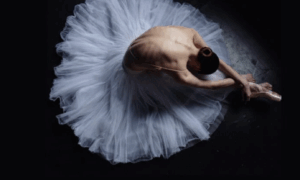
Ballet dancer Amelia shares her experience with the Butterfly Foundation, describing how she was captivated by the Australian Ballet at eight years old, which inspired her to pursue ballet training and land a company role at eighteen. She tells the blog about her struggles with body image and eating, saying “I didn’t want anyone to see me – I had comments about my body from my director and choreographers who I worked with which made me doubt everything about myself. I was taken out of ballets and told I should never wear a certain leotard because it made me look ‘big'”. In reference to Amelia’s story, dietitian and founder of DDD Centre for Recovery, Fumi Somehara shares similar quotes that she frequently heard ballet teachers telling their students:
“During my years of training, it wasn’t rare to hear “don’t get a full-blown eating disorder, just get a little bit of it.”
“There was also this definite sense that not having your period [because of malnutrition] was seen as lucky instead of alarming. You’d hear, ‘oh great, now you can wear a white leotard and you won’t have any issues.'”
Another professional dancer, Suvi Honkanen, shares her story through the blog Ballet with Isabella, stating how a 15 year long battle with an eating disorder started with the words “Lose a kilo” from a ballet instructor at age 14. “When my teacher told me to lose weight, the first feeling was shame…The next morning, I stood in front of my mirror and looked at my body with a new, unfamiliar feeling. I squeezed my stomach in, and I wasn’t able to wrap my hands around my waist. My ballet teacher had told me a ballet dancer should be able to do that”, Suvi wrote. Moreover, Suvi explains how when she managed to lose a significant amount of weight at age 16 due to extreme unhealthy dieting, she became “a new person who wasn’t a little too chubby or soft for her ballet teachers.”
Jess Spinner, a former professional dancer now health, nutrition and lifestyle coach for dancers, shares her eating disorder story with The Whole Dancer. She describes how she can trace her disorder back to when she was 15 years old. She was at a nutrition lecture at a ballet summer program, when the nutritionist took a tub of Crisco and dumped it onto a student’s hand and said, “That’s a donut”. Jess has not eaten a donut since. Jess’s habits escalated when she got to college – she shares that she subconsciously lost weight lost weight to fit a costume that was two sizes too small for her, but it was what her cast A counter-part wore, so she had to wear the same one.
These women are only a select few of the millions of dancers that have been affected by eating disorders. While there are most definitely dance studios and teachers who uplift diversity and differing body types, this toxic dance culture is still maintains a worldwide presence. Amelia sums it up best, writing “I hope we can choose leaders who are well equipped to lead companies into the future (and not stay back in the 1900’s because it is easy) with mentally well dancers who feel supported, and dancers with a diverse range of body types who are confident in who they are as artists…We are not just bodies on stage”.
Related posts:
 When ‘Ballet Pink’ Isn’t Pretty: The Cost of Conformity for Dancers of Color
 For You/Them, Love Us
 Met Museum stopped prayer to Ancestral gods
 Anna Delvey: Dancer or Felon?
 Dancing with a Con Artist
 Berlin Techno: Trying to preserve the authenticity of a scene
 The Camera Eats First
Powered by YARPP.