
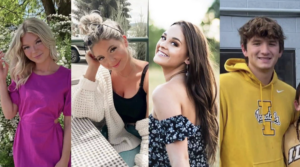
Kaylee Goncalves, Madison Mogen, Xana Kernodle, and Ethan Chapin were four typical college students. They were involved in academics, student organizations, part-time jobs, and their social lives. However, on November 13, 2022, their lives were tragically ended. News quickly spread from the local community to the entire country that four college students had been violently stabbed to death in their own home. The graphic nature of the crime, combined with it occurring in a seemingly safe college town, shocked Americans. Immediately, people began to wonder what had happened and who was responsible.
Some people became extremely invested in the case, taking to social media to post their own theories. These self-proclaimed “internet sleuths” complicated the investigation and its surrounding environment by spreading misinformation, harassing innocent people, and contributing to an overwhelming amount of tips and speculation for law enforcement to address.
Before Bryan Kohberger was arrested on December 30, 2022, the true-crime community hyper-focused on several potential “suspects.” One of the most extreme examples involved TikTok influencer Ashley Guillard, known online as “Ashley Solves Mysteries,” who used tarot cards to claim that Dr. Rebecca Scofield, chair of the University of Idaho’s history department, had orchestrated the murders to cover up a secret relationship. Scofield, who said she had never met the victims, faced accusations online and eventually filed a defamation lawsuit against Guillard. Even after the lawsuit was filed, Guillard doubled down on her claims, saying, “Everything I’ve said about her” was true, although she could no longer discuss the accusations because of the lawsuit. An attorney for Scofield argued at the time that Guillard’s accusations further traumatized the victims’ families and undermined law enforcement’s efforts to find the person responsible. The social media speculation was not limited to strangers, either. Online attention also fell on people within the victims’ closest relationships, including former romantic partners. Law enforcement cleared individuals who became subjects of widespread online speculation and stated that they were not considered suspects.
When Washington State University graduate student Bryan Kohberger was arrested on December 30, 2022, the online conspiracy theories did not end. As the court restricted what attorneys and other involved parties could publicly say about the case, reliable information became limited. This lack of information created an environment where true-crime creators could fill their pages with theories that often had little or no verified evidence behind them. The focus shifted from “Who did it?” to a new wave of speculation surrounding Kohberger. Some internet users theorized that he had been participating in Reddit discussions under the username “Papa Rodger,” partly because the account discussed a knife sheath before that detail was widely known to the public. Other theories claimed Kohberger had stalked the victims, followed them on Instagram, or visited the Mad Greek restaurant where two of the victims had worked. These claims circulated widely online even when they had not been established by investigators.
I will admit that I also got wrapped up in some of these theories when the case initially happened. However, there is a major difference between privately following a case and publicly accusing real people of being involved in a murder without evidence. Once these theories begin harming people who actually knew the victims or pulling innocent people into a murder investigation, the fascination stops being harmless. To me, the Idaho Four case represents how true-crime culture has spiraled out of control in America. It has become normalized for people to become extremely invested in criminal cases, develop their own theories, and broadcast them online for views and engagement. In the process, victims can become characters in an online mystery rather than real people whose families and friends are grieving them.
There should be greater accountability for creators who publicly make unsupported accusations against identifiable people involved in criminal cases. Free speech is important, but that does not mean online speculation exists without consequences, particularly when it crosses into defamation, harassment, or direct harm. The Idaho Four case is also not the only recent case where this has happened. Other highly publicized cases, such as the Lindsay Clancy case, have attracted similar levels of online speculation and amateur investigation. As true crime continues to grow as a form of entertainment, we should question where the line falls between legitimate public interest and treating real people’s tragedies as content.
Related posts:
 January 6th: The Art of Conspiracy
 Murder, Mystery & Makeup with Bailey Sarian
 A Podcast That Ruined a Life
 Moderators Mental Health Negatively Impacted by their Job
 Chalk Lines and Controversy: Felix Morelo, TikTok, and the Debate Over Suicide Spots
 Pornography – The Shamed Artists
 When Home Movies Become Work: Family Vlogging and Childhood at Stake
Powered by YARPP.