
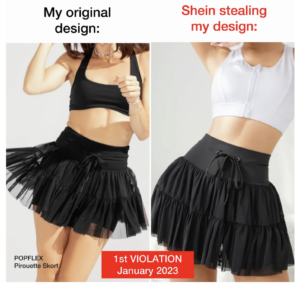
Fashion has consistently included imitation. Designers take inspiration from past styles in colors, silhouettes, fabrics, and concepts, while shoppers frequently look for budget-friendly alternatives to pricey garments. Lately, this trend has been termed “dupe culture,” referring to inexpensive products that mimic sought-after designer goods. However, the term “dupe” is so frequently and casually used that it can blur the line between inspiration, imitation, and genuine intellectual-property theft. The debate about Cassey Ho’s Popflex Pirouette Skort illustrates how fashion can turn into a type of art crime when a major corporation replicates the original designs of a lesser-known designer and profits from it.
Cassey Ho is the creator and designer of Popflex, a fitness apparel brand that evolved from her wellness platform, Blogilates. A highly recognizable design of hers is the Pirouette Skort, an athletic skirt featuring layers and integrated shorts. Following Taylor Swift’s appearance in the skort during a promotional video, the design gained immense popularity. Ho later found out that Shein and other online retailers were selling versions of the skort. Ho claims that Shein replicated the design multiple times, and comparable versions surfaced on Amazon and various other sites. She additionally stated that certain sellers utilized images of her original design to promote their own apparel. Ho’s experience illustrates how rapidly social media can aid an artist’s success, while simultaneously simplifying the process for others to replicate the artist’s work.
From a legal standpoint, the matter is more intricate than just inquiring if two garments resemble each other. The U.S. Copyright Office states that apparel is typically viewed as a “useful article,” indicating that the fundamental design of a piece of clothing is generally not safeguarded by copyright. Nonetheless, fashion illustrations, textile designs, art pieces, jewelry, and some ornamental features might obtain legal safeguarding. The Verge’s exploration of dupe culture clarifies that a dupe does not necessarily feature the original brand’s name or logo, distinguishing it from a typical counterfeit. A counterfeit item claims to be the original, whereas a dupe might replicate the look without asserting it was created by the original designer. Even if a copy is legally permissible, it can still spark ethical concerns regarding the origin of the idea and who profits from it.
The culture of duplication alters people’s perception of originality. Advocates claim that budget-friendly options enhance accessibility in fashion and enable individuals with limited finances to engage in trends. That reasoning makes sense, yet it may overlook the effort required to produce a unique design. Ho has described investing considerable time and resources in creating her products and securing them via design patents. In the meantime, firms with greater resources can swiftly replicate a successful design, take advantage of the original creator’s marketing, and offer the imitation at a reduced price. This establishes an unbalanced dynamic where the original creator assumes the artistic gamble while a bigger corporation reaps most of the monetary benefits. Therefore, fashion copying is not merely a legal matter. It raises issues of power, labor, and artistic ownership as well. A low-cost option may appear innocent when considered as an isolated purchase, yet numerous reproductions can undermine the capacity of independent creators to earn a livelihood from their artistic skills. Dupe culture prompts us to reevaluate the definition of stealing. At times, theft includes a forged logo or a fake label, but occasionally it consists of appropriating an artist’s concept, deleting the artist’s name, and marketing the outcome as though the creative effort never took place.
Related posts:
 “Dupe Culture” and the Line Between Inspiration and Counterfeit
 Ice on My Wrist a Masterpiece or a Sham? Why you Should (or Shouldn’t) Care
 Wolfgang Beltracchi’s Career of Art Forgery
 Shein Dupes Wreck Havoc on Small Businesses
 Shein: The One Stop Shop For Going-out Tops, Chicken Nuggets Earrings, and Child Labor?
 Shein vs Forced labor
 Shein’s Pattern of Insensitivity: Profit Over Principles
Powered by YARPP.