
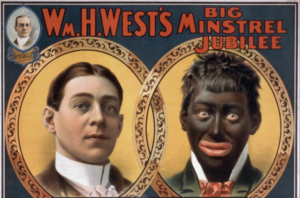
American stand-up comedy has a complex history, especially when examining where Black performers exist within this realm. For much of the 19th and early 20th centuries, mainstream American humor was defined by minstrel shows, which were theatrical comedic performances. Beginning in the 1830s, white actors would wear blackface and tattered clothing to impersonate enslaved Africans. These shows mocked black culture, speech, and movement, which exaggerated racist stereotypes of laziness, ignorance, and hypersexuality, into entertainment for white audiences. Minstrelsy became increasingly popular and even spread to radio, film, and television outlets. Because of this, comedy was used to reinforce a racial hierarchy and deny Black people agency over their representation.
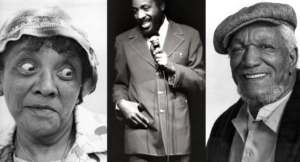
Because of Jim Crow laws, black comedians were only allowed to perform in all black theaters. However, during the Civil Rights movement in the 1960s, Black comedians finally began entering spaces that had historically excluded them. Here, these early comedians used humor to confront the dehumanizing portrayal that came from minstrel shows, and began to make stand-up comedy a place of expression and empowerment. Comedians like Dick Gregory, Jackie “Moms” Mabley, and Redd Foxx each pushed these boundaries in their own ways. Gregory did so through sharp political commentary on segregation and racial violence, Mabley through her laid-back delivery that cut at gender and racial inequalities, and Foxx through the raw, uncensored style that later brought him national fame.
As Black comedians became more visible, stand-up started reaching a wider audience. Comedy albums, late-night shows, and cable TV brought their voices into homes around the country. This created an outlet to talk openly about race, injustice, and personal experience through entertainment and humor. Instead of comedy being something used to stereotype Black people, it became a tool for exposing the realities they faced and forcing audiences to sit with it. Using humor to talk about painful or uncomfortable topics did more than just reclaim their story. It loosened the pressure around subjects that had been weaponized against Black people for generations, and by joking about them on their own terms, these comedians stripped those stereotypes of their power. The fact that this was happening on such a public stage made the impact even stronger.
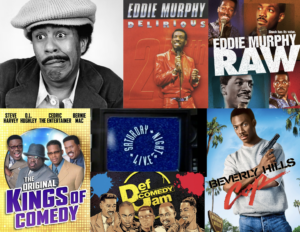
The next generation of comedians expanded this transformation in a way that made it impossible to ignore. Richard Pryor changed stand-up by being completely honest about race, pain, and personal chaos, and his vulnerability and rawness set a new tone for what modern comedy could be. Around the same time, SNL became a massive cultural force, and its only Black original cast member, Garrett Morris, used the show’s national platform to directly mock racism and white supremacy through his sketches. A few years later, Eddie Murphy exploded onto that same stage and took everything to another level. His SNL characters, iconic stand-up specials like Delirious and Raw, and starring roles in films like Beverly Hills Cop turned him into one of the biggest stars in America. His comedy was outrageous, raunchy, and completely unfiltered, and his success showed that Black performers weren’t just included in mainstream comedy but were shaping it. By the 1990s, with Def Comedy Jam and the Original Kings of Comedy filling arenas, it was clear that Black comedy had become a powerful, influential force in American culture, one that pushed boundaries, changed the industry, and proved that Black comedians could define the direction of the art form altogether.
Today, stand-up comedy looks completely different from the world shaped by minstrel shows, and that change is largely because Black performers refused to let comedy remain a tool of mockery. Over time, they turned the stage into a place where they could perform on their own terms, reclaiming their stories, critiquing society, and speaking honestly. As they gained more visibility, comedy expanded into a form of cultural commentary that was willing to take risks and confront the issues that mainstream audiences were uncomfortable facing. The comedians who pushed these boundaries and reframed the art of comedy created the foundation for the bold and transgressive humor that is popular today, turning a stage once used to belittle and restrict them into a platform they could own, grow, and lead.
Related posts:
 Jumping into Racism: The Artistic Origins of Jim Crow
 Should You Be Offended?
 The New BlackFace: Super Size Jewelry, Drugs, Guns, Women, & Rapping
 The Art of Stringing Along Scammers
 Racism Choreographed into a High School Dance Team
 The Entertainment of Exploitation
 The Dark Depths of Hollywood: P Diddy’s Sex Trafficking Ring
Powered by YARPP.