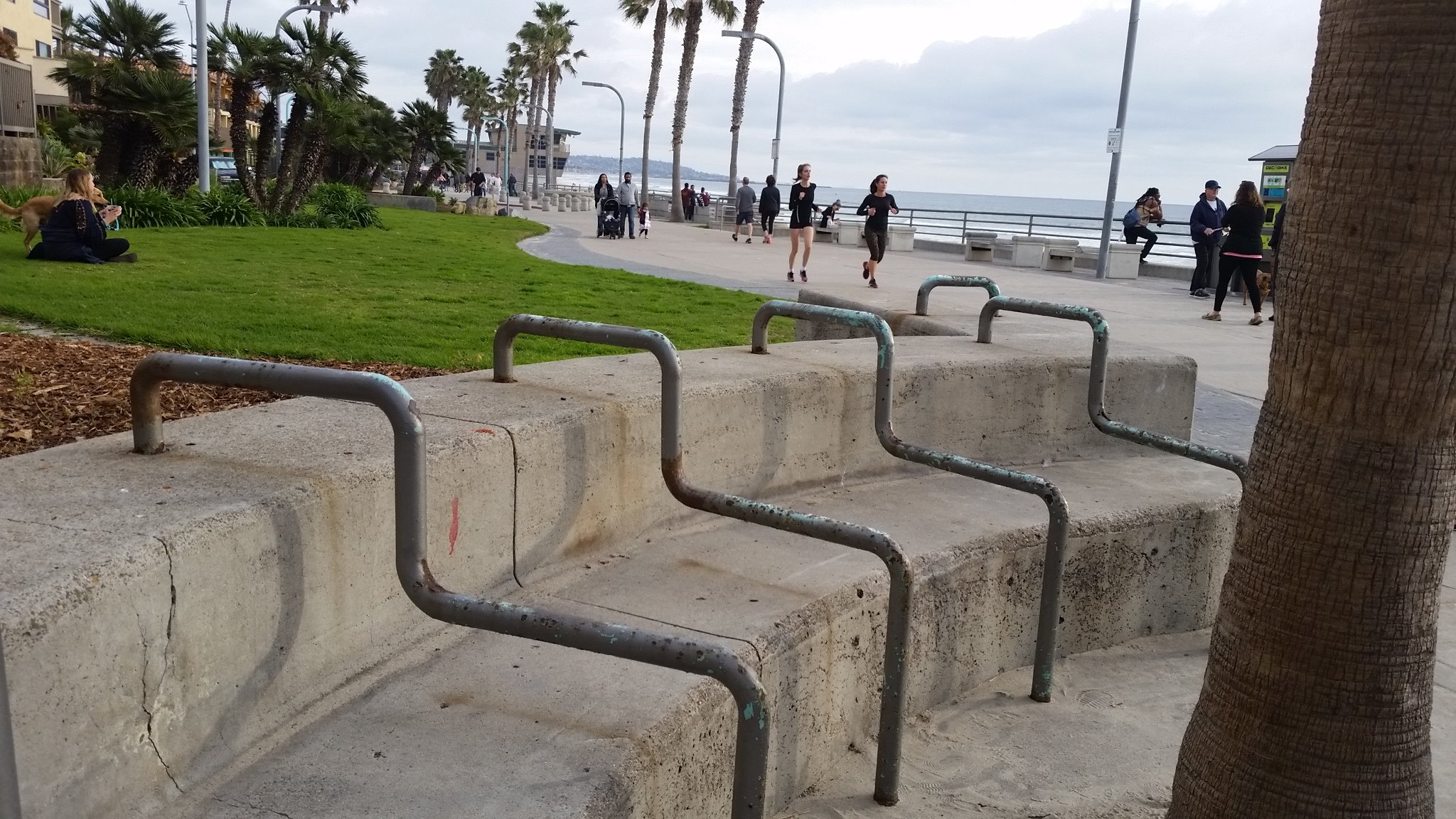
Everyone has seen the spikes on the ledges of buildings, seemingly random armrests placed in the middle of benches, sloped ledges next to buildings; these are all examples of a form of architecture that has increasingly become the norm around the world. Hostile architecture are designs that are meant to discourage and prevent certain behaviors like sitting for too long, skateboarding, or sleeping in these locations. Most often these structures are targeting teenagers, the unhoused, and lower income populations since these demographics often rely on public spaces the most. These designs have essentially limited and restricted the accessibility of public spaces and controls who belongs in them. However, artists have pushed back against these designs in some creative and analytical ways.
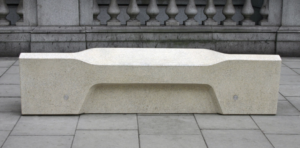
Two very famous examples of hostile architecture were both in London: the Camden Bench, and the Anti-Homelessness Spikes. The Camden Bench, a bench installed in London in 2012 is essentially a rectangular block of cement purposefully made with smooth edges to prevent skateboarding tricks, a sloped angle to prevent people from lying down, and a waterproof paint coat to prevent any graffiti. This bench faced a lot of backlash after its installation as the public began to wonder who this remodeling of public spaces is really for. The second questionable design was actually removed after its installation due to the criticism it faced. The Anti-Homelessness Spikes were installed outside of a luxury apartment complex in London after an unhoused person had slept in that alcove for a few nights. This case went viral online and the spikes were eventually taken down, however anti-homelessness spikes have become increasingly commonplace in society as the rates of homelessness increase with the increasing cost of living. These are just two popular examples of hostile architecture but it surrounds us everywhere from sloped benches at bus stops, to sprinklers running only in the middle of the night, to mosquito devices which emit a high frequency buzzing sound only audible to younger demographics.
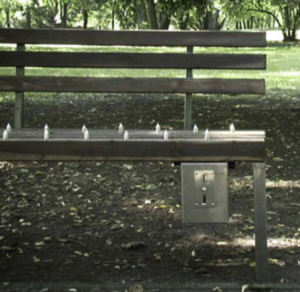
Artists have used their creativity to protest these structures over the years and draw attention to the fact that these public spaces are not so welcoming to the public. Fabian Brunsing launched an art piece called “Pay and Sit” in which a bench covered in spikes only retracted after inserting a coin into it. Therefore commenting on the classist nature of hostile architecture and how it is only limiting access to public spaces for those who can not afford to do anything else. Or Sarah Ross launched a piece known as “Archisuits” which was a piece that combined soft leisure wear clothes and the hard, rigid structures of city architecture commenting on the unwelcoming nature of public spaces today. People have also individually taken to fighting this system in guerilla practices to combat the hostile environment by using cushions or pillows or jackets to cover up the hardness of these structures.
Once you notice this kind of architecture it is hard to ignore it. You start seeing it everywhere you go, and it begs the question “who are they trying to keep in, and who are they trying to keep out of these so called ‘public spaces’?” This kind of architecture targets lower income and minority populations, and is a driving factor in how accessible places in the city are, but it also is a reminder of the power of art, and how art can help target these social injustices and call attention to them. Art makes us think and ponder about issues we never may have even thought about before, but it is up to us to take the next step and make a change in policy.