

AI is the topic anyone and everyone talks about; schools, social media, and politicians all love to talk about AI and the benefits or drawbacks it offers society. More recently, there’s been a new addition to the AI topic: its role in surveillance technology. We’ve seen an increase in AI usage in cameras all over the world. 60% of people in the UK were fearful that facial recognition was turning the UK into a surveillance society. Paris, another metropolitan city, faced similar sentiments, with the Oxford Human Rights Hub claiming that the hundreds of AI cameras set up for the Olympics were at risk of “eroding privacy and civil liberties.” Even Americans are seeing more than 100,000 AI-enabled cameras in every state except Alaska. It’s safe to say it’s likely that this fear of AI surveillance is increasingly becoming justified. Which begs the question: why are so many places implementing AI cameras?
Proponents of AI cameras are claiming they can significantly reduce the cost of crime across various cities. These cameras have provided key evidence in missing person cases and even helped track down people involved in violent crimes, such as the Brown University shooter in 2025. These are only some of the benefits that these AI surveillance cameras have been providing, and yet there’s a TikTok trend of people destroying them.
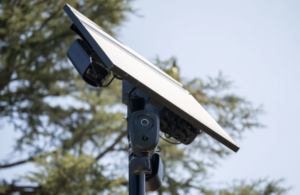
Specifically, citizens have been taking it upon themselves to tear down Flock cameras. Flock cameras are automated license plate readers (ALPR) systems that log vehicle details “including license plates, vehicle characteristics, and the time and location a vehicle passed a camera,” a definition straight from their website. These cameras in particular have fallen victim to this internet trend, with citizens across America vandalizing, destroying, or trying to impair these cameras.
The contempt felt for these cameras goes further than simply feeding into another internet trend; it taps into a fear of surveillance. Or, more specifically, a fear that surveillance is being used to track and control populations. Just as there have been benefits attributed to the cameras, there have also been incidents of misuse. Across America, there have been incidents of police stalking their ex-girlfriends to even targeting individuals they believe to be “illegal immigrants.” These technologies are also flawed, with Black and Asian people more likely to be incorrectly identified than their white counterparts.
Further, Flock data is uploaded to one big database that any law enforcement agency that works with the company can access without a warrant. Meaning, you could potentially be tracked from one camera to another and have your entire life exposed to a degree that’s never been seen before.
These fears of surveillance and tracking are not unfounded, with the writers of the Bill of Rights having similar worries. The Fourth Amendment protects individuals from unreasonable searches and seizures by the government, and lays the foundation for a “reasonable expectation of privacy,” or in other words, requires law enforcement to get a warrant before searching a private place (one where someone expects privacy). An easy example could be that you expect to have privacy in your own home. In this digital age, the idea of privacy, and when one can expect to have it, becomes more convoluted with social media and technology being in even the most private of places.
There are 2 important court cases related to privacy and understanding what is protected and what’s not. The first case, Carpenter v. United States in 2018, found that accessing someone’s historical cell-site location information (CSLI) data without a warrant is unconstitutional. They argued that CSLI provides an “intimate, comprehensive chronicle of a person’s movements” that can reveal very personal information, which is protected under the Fourth Amendment. These arguments built on other rulings (United States v. Jones 2012, United States v. Miller 2025, and United States v. Smith 2024) that together set a precedent arguing that GPS, CSLI, and other ways to track an individual’s long-term movement are unconstitutional, as they violate an expectation of privacy.
The second case, Chatrie v. United States in June of 2026, established that records gathered by apps on one’s phone require Fourth Amendment protection. These records can be “emails, documents, photographs, calendars or location data.” The court importantly argues that location data falls under Fourth Amendment protection, bringing us to the AI and Flock cameras’ violation of our rights.
These cameras are recording people’s longer-term movements and are seen in almost all major cities, meaning that they can, and have, been used to track people’s location and movements from one area to the next. All of which is being done without a warrant, violating our constitutional rights.
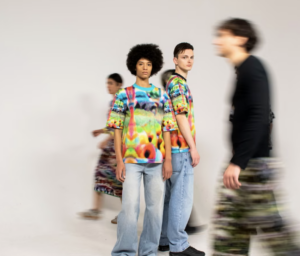
But that’s not the end of the story: We see people fighting back. There has been an emergence of fashion activism where people are designing clothes that are specifically “anti-AI cameras,” allowing them to become unrecognizable to the camera’s detection system. Various companies have started producing these clothes, with one of the biggest names being Cap_able, founded by Rachele Didero. The clothes that her company designs are done in such a way that the camera is not able to recognize that the wearer is human; instead they’ll see an animal such as a zebra or a dog. But, importantly, it allows cameras to be unable to survey you. She explained that she had become more and more aware of biometric cameras being used in New York and created clothing to combat this phenomenon. She elaborated, saying, “The problem with [surveillance] technology is that citizens don’t have the possibility in the physical world to opt out. In the digital space we can say yes or no to cookies. In the physical world, we don’t have this option. We wanted to create this physical protection that would allow the citizens to give their consent, or not.” Insert two images: the first image is of 4 people with 2 people in the center that are clear and various people around them that are blurry. The second image is a woman in a grocery store wearing a dress that makes her blend in.
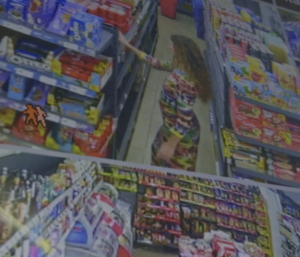
Another company, noRecognition, aims to create “universal adversarial camouflage,” identifying patterns that can confuse these AI cameras. And they’re not the only ones. Dr Jennifer Bell, a professor from the Nottingham School of Art and Design studying AI and fashion, claims, “That growing awareness combined with a lowering of cost often precedes the tipping point towards a real cultural moment,” a movement that is trying to give power back to the people. The market is quickly expanding with high-end options, such as Cap_able, to cheap 15-dollar shirts that work to ensure that the public is aware of this growing invasion of privacy and gives them the tools to fight back.
Through this activism, we see people trying to reclaim their civil liberty of privacy and push back the boundaries that the government may be crossing. Constant surveillance is unconstitutional and a growing problem to which fashion activism seeks to bring attention.
Adversaries of this activism have claimed that it’s a useless battle, as AI can be trained to recognize people despite even the most cleverly designed outfits. Ultimately, one of the main points of designing these types of clothes is to bring attention to the issue. By wearing these clothes, which often look unpleasant to the human eye, people spread awareness about the importance of privacy and don’t allow this topic to fade from the public’s attention. They continue the debate and force a conversation about potential solutions to stop misuse and protect our civil liberties.
In a world where AI is created faster than legislation can regulate it, citizens often end up paying the price. People such as Didero seek to give power to the people.
Related posts:
 Coachella using army of Drones
 When Machines Make Art: AI, Creativity, and the Exploitation of Artists
 “Burn Bundy Burn”
 Global Censorship / The People’s Republic of China
 I Can’t Wear my Beliefs in Minnesota?
 “Snowflakes” Stand Up for the American Flag
 Fashion’s Obsession with Domestic Abuse
Powered by YARPP.