
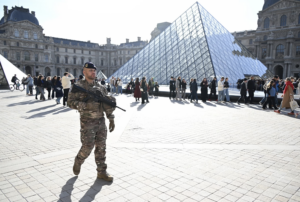
The Louvre Museum heist in 2025 showed that even the world’s most famous museums are not fully safe from burglary. On October 19, 2025, four criminals broke into the Louvre in Paris during regular visitation hours and stole eight pieces of French royal jewelry from the Galerie d’Apollon. Crowns, necklaces, earrings, and brooches representing French queens and empresses were among the items on display. The stolen items were estimated to be valued at around 88 million euros, or over 102 million dollars. The thieves ended up using a lift mounted on a truck to reach the balcony. They then cut through the window, broke into the display cases, and escaped via motorcycles, all under 8 minutes. One of the items stolen, a crown, was dropped during their getaway, leading to it being recovered but damaged. Sadly, most of the stolen jewelry still has yet to be recovered.
The fact that the robbery did not take place in the middle of the night added to its shock value. It happened in the morning, when the museum was open, and guests were present. The burglars disguised themselves as construction workers to make it look like they were around the building. They used power tools to break into the gallery and threatened guards, but the robbery occurred so rapidly that the police were unable to intervene. The lift, motorcycles, pricey diamonds, and tight time frame made the event feel like a movie. Despite that, it showed us that sometimes crime doesn’t have to be a whole elaborate plan, such as what we have seen in movies such as Oceans 8. Sometimes criminals can take advantage of easy ways, thinking that even an unprotected window or a smaller door can be used.
The investigation helped many different problems come to light regarding the Louvre’s security. It showed that only a very small percentage of rooms in the museum are actually monitored by camera and security. The camera in the Galerie d’Apollon wasn’t positioned properly; therefore, the robbers knew and took advantage. The security room also didn’t have enough workers or even screens for people to be monitoring all the cameras at the same time. That meant that the robbery was indeed on camera, but no one noticed it fast enough for the security procedures to come into place. Prior reports warned the Louvre security team about outdated technology and weak security systems, but many of the tasks hadn’t been completed, or even started. One of the reports listed states that the Louvre has spent more money on visitors and their experience between 2018 and 2024, instead of security improvements. Louvre Rules.
Museums nowadays try to protect the most valuable objects with several different methods of security and ways to get around, instead of the one-way systems that some of the Louvre had at the time of the break-in. Most places use numerous cameras, alarms, different locks, and security guards. They also tend to have employee-only areas along with controlled access and specific records of each item in stock. Security and workers are also well informed of theft, fire, vandalism, and other situations that may need extra support or information. More modern museums tend to have their security on top of it and constantly reviewing the manual. Making sure they know the guards, workers, volunteers, and even the curators of the rooms. That allows for good knowledge of the museum and the collection, really informing them that the main goal is to allow the public to enjoy the items while also ensuring safety. The Museum Security Toolkit.
Post the robbery, the Louvre added more cameras, new security systems, protected windows (metal bars), specific access gates, and even additional guards. The Louvre also started a massive budget security improvement, said to be worth around 80 million euros. When the Galerie d’Apollon opened again in 2026, the stolen items weren’t replaced or changed; instead, the gallery has now been changed, and now it’s presented as big historical space. Without the valuable objects, the visitors wouldn’t come much more, but this rebranding has brought out another side to the museum. Some of the security improvements that are taking place now are long-term projects aimed at becoming the new standard for museum security and surveillance. TBS News.
Now people question: would a similar heist happen nowadays? I think it’s almost impossible, but not totally impossible. The Louvre now knows and has a decent understanding of how the robbers entered; they are now able to prepare and be more alert when it comes to future possible break-ins or breaches. A good start would be to notice the lift right outside of the museum. They’ve added additional security folks and barriers, all giving police and guards more time to react to the alarm. The stolen jewelry has also since been removed from display; thus, a similar robbery can’t be executed. I think once the systems have been fully updated and the proper employees are hired, similar situations shouldn’t occur. Despite that, it allows for more possibilities or creativity to occur. Criminals can always find another way to do something; just the best way to prevent situations such as the Louvre attack is to continue to update technology and completely train workers. They need to be willing to spend money on security; if not, attacks may continue to occur.
There is a connection between the Louvre theft and how people view crime. Many people think that art theft is the work of a brilliant criminal who meticulously prepares everything, but this robbery demonstrated that crime may also occur when institutions fail to address issues for an extended period of time. The theft was committed by the burglars, but the museum also received warnings that were not promptly addressed. This does not imply that the heist was the result of the Louvre, but it does demonstrate how bad management can give criminals a chance. A museum may have priceless artifacts, fantastic scenes, and perfect decoration, but none of that truly matters if the security fails as easily as it did at the Louvre.
In my opinion, the biggest thing I learned from this research is the massive effort needed for different museum security measures. Instead of being vaults with everything locked away, museums are supposed to be open areas where visitors may view significant artifacts up close. However, priceless cultural artifacts cannot be handled like regular ornaments. The burglary demonstrates that security must be upgraded on a regular basis, yet the Louvre’s security is now stronger because the museum learnt from the theft. Even in a location that appears unbreakable, another robbery could occur if museums grow overconfident, believe their fame would shield them, or disregard expert advice.
Related posts:
 The “Perfect” Fit: Who Needs Privacy When You Can Get Targeted Ads?
 Art You Can See, Art You Can Steal: The Louvre Heist
 7 Minutes Is All It Takes
Have Heists Become Chic?
 Now you see me, now you don’t: AI Surveillance and Fashion Activism
 Mystery of the Gardner Museum Art Heist
 Billions of streams, No Real Fans: 8 Million Dollars, AI music scam
Powered by YARPP.